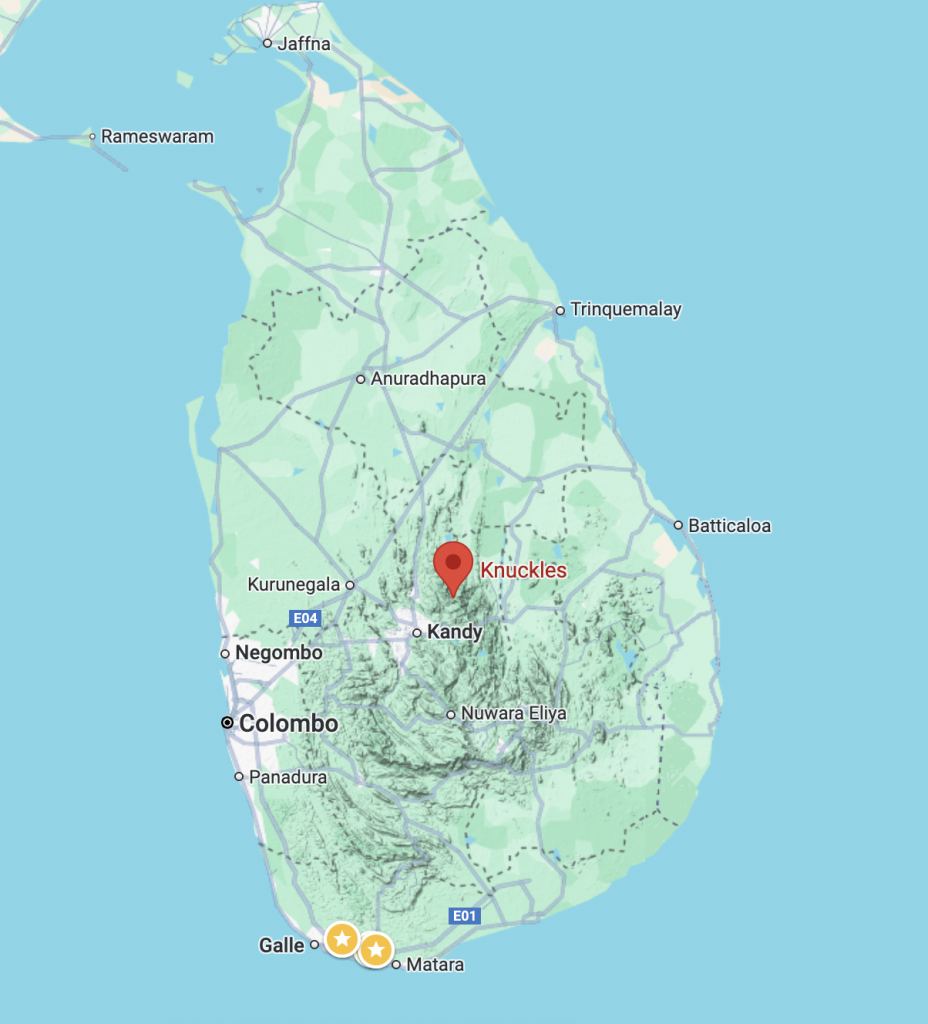
Located east of Kandy, the Knuckles Mountain Range, also known as Dumbara in Sinhala, is one of Sri Lanka’s most spectacular natural regions. Named by the British for the shape of its five main peaks, which resemble the knuckles of a clenched fist, this lesser-known area offers a rare blend of biodiversity, dramatic landscapes, rural culture, and outdoor adventure.
Knuckles Mountain Range – Key Facts
- Area: Approximately 185 km²
- Highest elevation: 1,863 m, the sixth-highest peak in Sri Lanka
- Status: Protected natural heritage and conservation area listed as a UNESCO World Heritage Site
- Climate: Highly variable and unpredictable, ranging from 5.5°C to 35°C
- Best time to visit: March to September, with lower rainfall
- Access: From Kandy via the A26 road, Corbett’s Gap, or the villages of Meemure, Panwila, and Riverston
An Exceptional Climatic and Biological Microcosm
Despite covering only 0.03% of Sri Lanka’s total land area, the Knuckles Mountain Range concentrates an extraordinary level of biodiversity. All of the country’s climate zones can be found within this single massif, making it a true open-air natural laboratory.
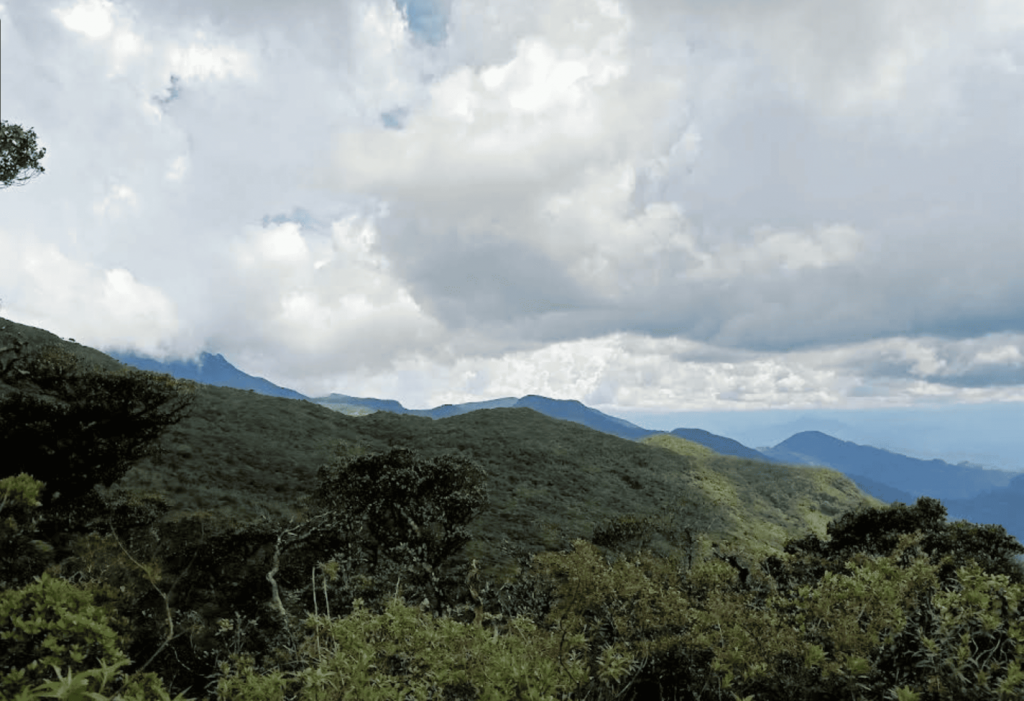
High-altitude cloud forests, savannah-like grasslands, dry thorn forests, wooded slopes, and river valleys follow one another, sheltering unique plant and animal life. The region is home to more than 34 peaks and over 200 bird species, including 15 endemic species such as the Sri Lankan blue magpie and the Sri Lanka white-eye.

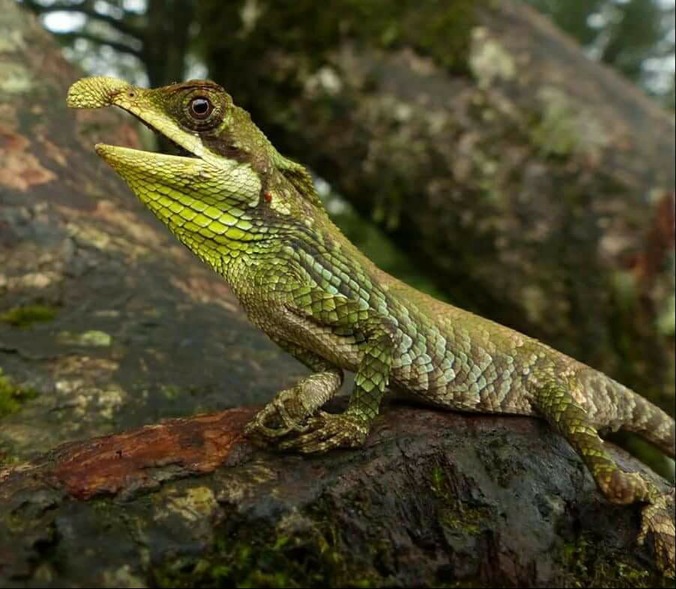
Mammals found in the area include langur monkeys, spotted deer, wild boar, giant squirrels, porcupines, mongooses, and barking deer. Several reptile species, including endemic lizards such as Ceratophora tennentii, are found exclusively in these mountains.
A Striking Natural Landscape
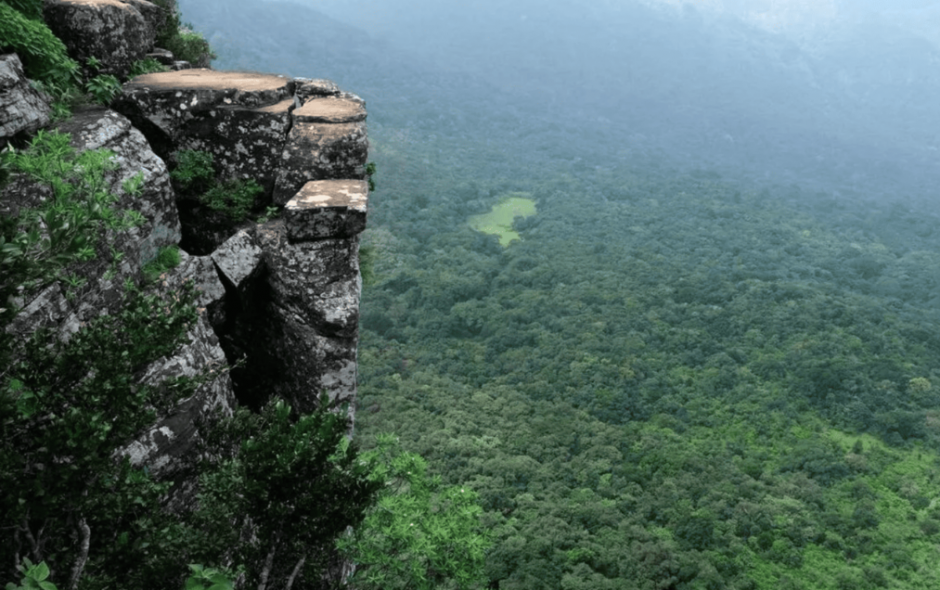
The landscapes of the Knuckles Range are remarkably diverse and visually powerful. Evergreen forests blanket the peaks, which are often shrouded in mist, creating an almost mystical atmosphere. Abundant rainfall feeds impressive waterfalls, winding rivers, and lush vegetation throughout the region.

Tea plantations carpet the slopes like vast green quilts and produce some of Sri Lanka’s finest teas. Ancient rock formations and dramatic ridgelines add to the appeal, making the area particularly attractive to photography enthusiasts.

Hiking in the Knuckles: A Trekker’s Paradise
The Knuckles Mountains offer a wide range of hiking opportunities, from short half-day walks to multi-day treks. Trails pass through dense forests, tea estates, terraced rice fields, and remote villages. Among the most popular routes are:
Mini World’s End (1,192 m)
A spectacular viewpoint overlooking the valley, accessible from Deanston.
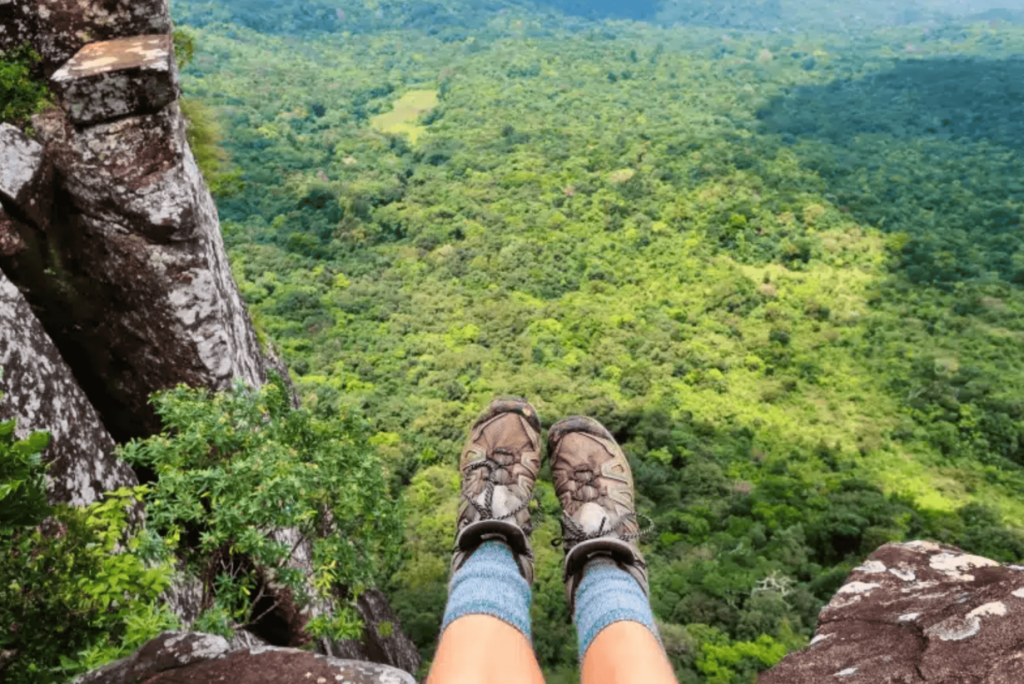

Dothalugala Trail
Starting from Deanston, this trail is ideal for observing local biodiversity.
Nitro Caves and Augallena Caves
Departing from Corbett’s Gap, these routes offer raw, untouched landscapes.
Kalupahana Trail
Starting from Meemure, this trail weaves through waterfalls and deep jungle.
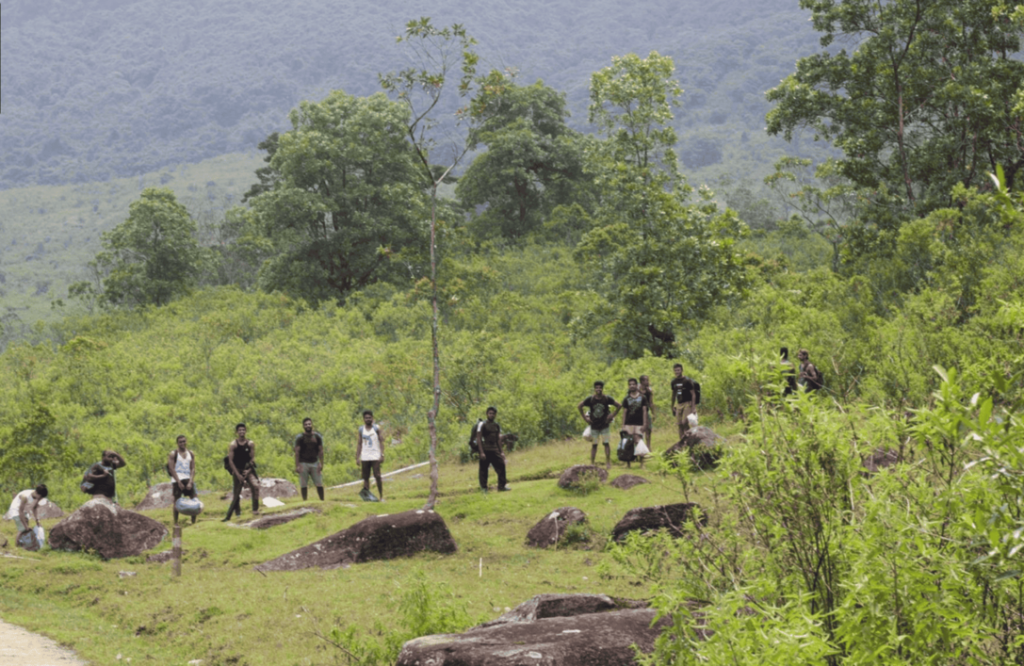
For experienced hikers, a three-day trek with overnight camping is possible. Weather conditions can change rapidly, with sunshine quickly giving way to fog or sudden rain. For this reason, hiking with an experienced local guide is strongly recommended.
A Human Experience: Traditional Villages and Local Hospitality
The region is home to 37 ancient villages, including Meemure and Heeloya, where traditions have endured for centuries. Local communities rely on rice farming, spice cultivation, and cardamom production, and still use ancestral transport methods such as ox caravans known as Thawalama.

Some trekking routes include immersive village experiences, such as traditional lunches, meetings with cinnamon or medicinal herb producers, and visits to the Wariga Sabhawa, a community court that dates back more than 700 years.

Where to Stay: Lodges and Eco-Tourism
Several accommodation options allow visitors to experience the Knuckles Mountains in total immersion:


Polwaththa Eco Lodges offer rustic cabins, local cuisine, spice workshops, and forest yoga sessions.
By Foot Adventures Camp, located 1.8 km from Rangala, sits at 1,500 m above sea level and offers a constantly changing climate.
Madulkelle Tea & Eco Lodge provides a more upscale experience, with an infinity pool and panoramic ridge views.
Knuckles Base Camp features tents and cabins deep in the forest, ideal for multi-day trekking adventures.
Additional Activities and Discoveries
Beyond hiking, the Knuckles region offers a wide range of experiences:
Wildlife observation, including birds, butterflies, and discreet mammals
Botanical exploration of cloud forests, medicinal plants, and rare tree species
Landscape discovery through tea plantations, waterfalls, rock formations, and panoramic viewpoints
Outdoor activities such as camping, river swimming, fishing, canoeing, cycling, or jeep tours
Our agency also offers combined itineraries linking the Knuckles Mountains with other natural sites such as Ella, Horton Plains, or Wasgamuwa National Park.
Conclusion
Exploring the Knuckles Mountains is a rare and rewarding experience in Sri Lanka, one where nature, culture, and adventure come together. Less touristy than the major southern parks, this mountain range captivates travelers who take the time to explore it on foot, meet its inhabitants, and marvel at its preserved biodiversity.
For a personalized Sri Lanka itinerary, contact our local team specialized in the destination.